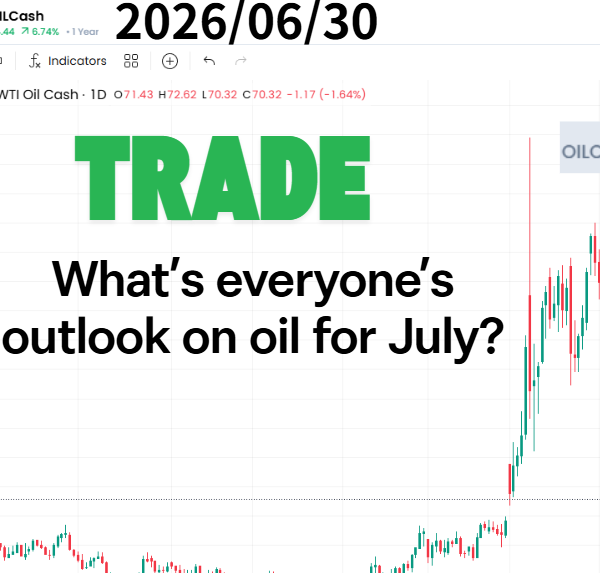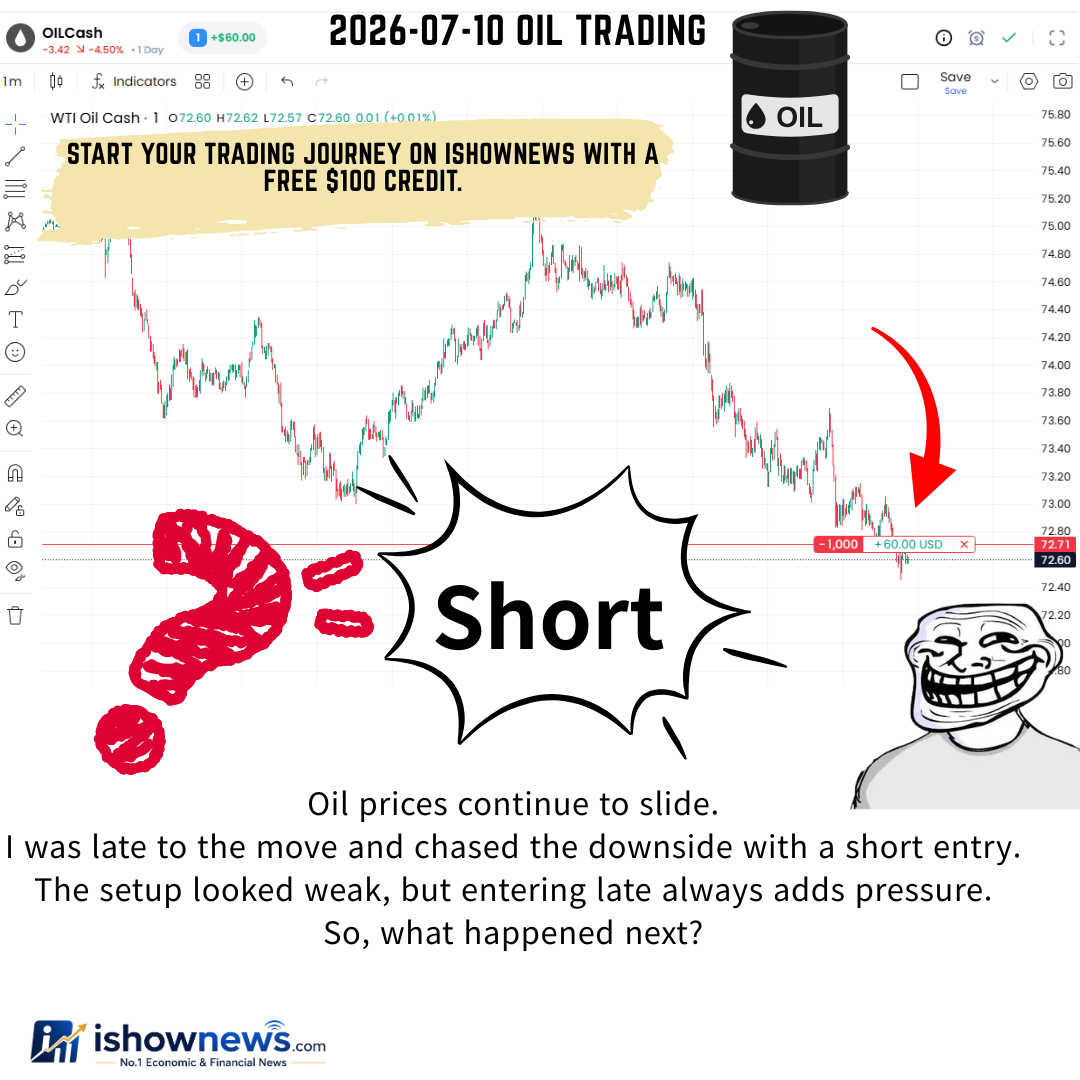
Oil prices continue to move lower as the market reacts to easing supply fears, stronger production expectations, and weaker momentum after recent geopolitical volatility.

Recently, oil had been supported by tensions around Iran and the Strait of Hormuz, but prices eased as investors started to assess whether supply risks may be stabilizing. At the same time, higher crude output and concerns about future supply pressure have added weight to the market. Reuters reported that oil prices recently slipped as crude output grew, while the EIA also projected Brent prices could move lower later in 2026.
For traders, this kind of market can look attractive because the trend appears clear. However, chasing a falling market late is risky. When price has already moved heavily in one direction, a short entry can be exposed to sudden rebounds, profit-taking, or sharp volatility from unexpected news.
That is why late entries often feel easy at first but become dangerous quickly. The trend may still be bearish, but the entry point matters. In oil trading, being right about direction is not enough — timing, risk control, and patience can decide the result.